Think of the experience of a perfectly ripe, juicy summer tomato—rich red color, perfect consistency, bursting with flavor. Buying in season makes all fruits and vegetables more enjoyable—and that’s not the only benefit, according to NYC-based registered dietitian Lisa Hayim. When you purchase produce at peak season, you get more natural nutrients, she says. “Because seasonal fruits and vegetables don’t undergo lengthy transit times to get from farm to your kitchen, these integral vitamins and minerals are more likely to be preserved by the time you’re ready to eat your produce,” she says. In fact, the Cleveland Clinic reports that spinach can provide up to three times more vitamin C when consumed in season—September through October.
You’ll also save money: Shorter travel times for your produce means lower shipping costs, which lowers the grocer’s price, and those savings get passed on to you at checkout. There’s also the law of supply and demand, says Los Angeles-based registered dietitian Lindsey Pine. “When fruits and veggies are in season, the farmers will most likely have an abundance of the crop and prices will go down.” For example, GAIAM reports that out-of-season basil runs $3 per half ounce; in season, it’s just $1 to $2.
If you’re looking for the freshest of the fresh, your local farmer’s market is a great place to start. Before you go, check out the six giveaways the produce at the farmers market isn’t fresh or local. And if you’re short on shopping time, join a CSA (community-supported agriculture association) for fresh, picked-that-morning produce sourced directly from a local farm. And when you’re shopping at the grocery store, you can buy in season with this guide to ensure you get the biggest nutritional bang for your buck. Don’t miss these secrets your farmer’s market isn’t telling you.
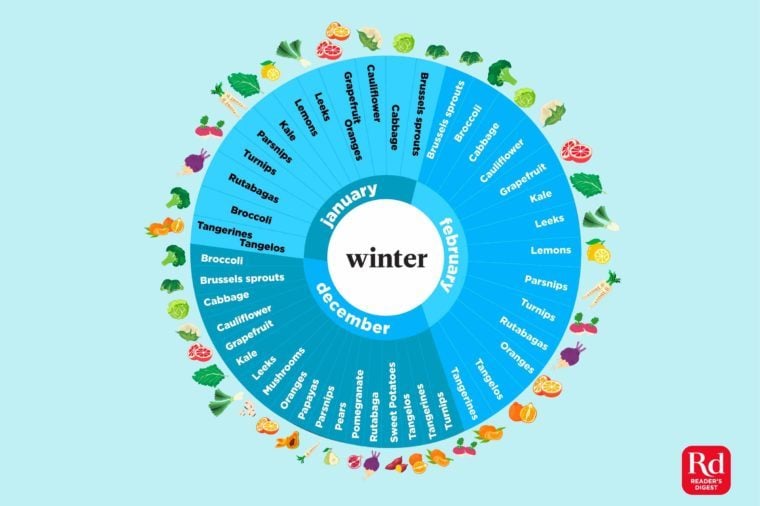
December
Broccoli
Brussels sprouts
Cabbage
Cauliflower
Grapefruit
Kale
Leeks
Mushrooms
Oranges
Papayas
Parsnips
Pears
Pomegranates
Rutabagas
Sweet potatoes
Tangelos
Tangerines
Turnips
January
Broccoli
Brussels sprouts
Cabbage
Cauliflower
Grapefruit
Kale
Leeks
Lemons
Oranges
Parsnips
Rutabagas
Tangelos
Tangerines
Turnips
February
Broccoli
Brussels sprouts
Cabbage
Cauliflower
Grapefruit
Kale
Leeks
Lemons
Oranges
Parsnips
Rutabagas
Tangelos
Tangerines
Turnips

March
Artichokes
Broccoli
Brussels sprouts
Cauliflower
Leeks
Lettuce
Mushrooms
Parsnips
Pineapples
Radishes
Rutabagas
Turnips
April
Artichokes
Asparagus
Broccoli
Cauliflower
Leeks
Lettuce
Mushrooms
Pineapples
Radishes
Rhubarb
Spring peas
May
Apricots
Artichokes
Asparagus
Cherries
Lettuce
Mangoes
Okra
Pineapples
Radishes
Rhubarb
Spring peas
Strawberries
Swiss chard
Zucchini
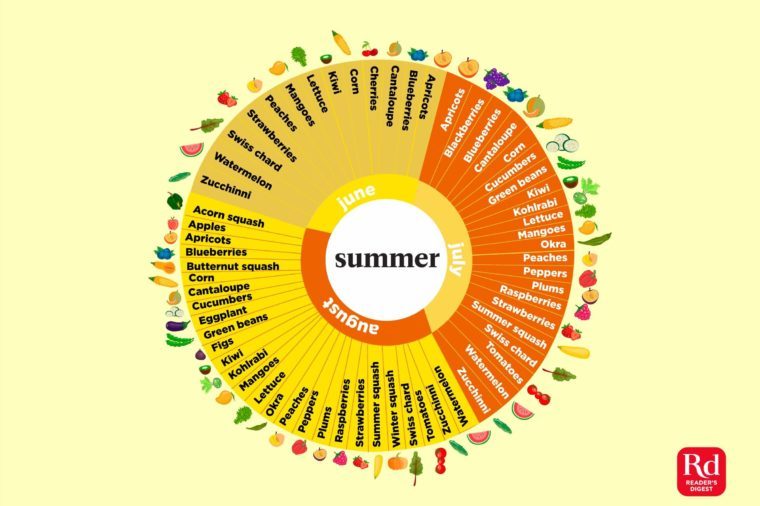
June
Apricots
Blueberries
Cantaloupe
Cherries
Corn
Kiwi
Lettuce
Mangoes
Peaches
Strawberries
Swiss chard
Watermelon
Zucchini
July
Apricots
Blackberries
Blueberries
Cantaloupe
Corn
Cucumbers
Green beans
Kiwi
Kohlrabi
Lettuce
Mangoes
Okra
Peaches
Peppers
Plums
Raspberries
Strawberries
Summer squash
Swiss chard
Tomatoes
Watermelon
Zucchini
August
Acorn squash
Apples
Apricots
Blueberries
Butternut squash
Cantaloupe
Corn
Cucumbers
Eggplant
Figs
Green beans
Kiwi
Kohlrabi
Lettuce
Mangoes
Okra
Peaches
Peppers
Plums
Raspberries
Strawberries
Summer squash
Swiss chard
Tomatoes
Watermelon
Winter squash
Zucchini

September
Acorn squash
Apples
Beets
Butternut squash
Cantaloupe
Cauliflower
Eggplant
Figs
Grapes
Green beans
Lettuce
Mangoes
Mushrooms
Okra
Peppers
Persimmons
Pomegranates
Pumpkins
Spinach
Sweet potatoes
Swiss chard
Tomatoes
October
Acorn squash
Apples
Beets
Broccoli
Brussels sprouts
Butternut squash
Cabbage
Cauliflower
Cranberries
Grapes
Leeks
Lettuce
Mushrooms
Parsnips
Persimmons
Pomegranates
Pumpkins
Rutabagas
Spinach
Sweet potatoes
Swiss chard
Turnips
Winter squash
November
Beets
Broccoli
Brussels sprouts
Cabbage
Cauliflower
Cranberries
Leeks
Mushrooms
Oranges
Parsnips
Pears
Persimmons
Pomegranates
Pumpkins
Rutabagas
Spinach
Sweet potatoes
Tangerines
Turnips
Winter squash
The post These Infographics Show the Fruits and Vegetables in Season Every Month of the Year appeared first on Reader's Digest.
from Reader's Digest http://ift.tt/2F1QoPl

No comments :
Post a Comment